Thursday, February 12, 2015

Movie Monday-Ordinary Miracles-The Photo Leaque Answers

  1. What was The Photo League's credo?
  The Photo Leaque was a social change can be achieve by going through the  documentary photography alongside with additional emotional connection with one's subject.
2. What organization did The Photo League separate from
 The organization the Photo League separate from the Frontier Films organization which is being seprated into Film and Photo League.
  1. What was the workshop?
  2. The workshop (feature groups of training photographers apprentices was consisting of joining students that are joined together in depth study of New York ethnic group neighborhood.
  3. Who taught "the workshop?"
  4. The workshop was taught by Sid Grossman.
  5. If you were to devote one year of your life to one project, what project is worth your time and energy?
  6. What was The Harlem Document?
The Harlem Document was the series of documents full of  photographsof its culture and their lifestyles of black African people living urban black communities to expose their living conditions in hopes for reforming for better living. 
  1. Who started The Harlem Document?
Aaron Siskind started the Harlem Document and it was effective from March 8th, 2014 to July 20th 2014.
  1. A photographer discusses a photograph where "the children looked like they came out of a  Caravaggio painting. Who was the painter? 
  2. Why did the photograph mentioned in #8 look like it was by the painter? 
         Because it make it was painted by Caravaggio because the boy in the photograph was illuminated by the sunshine and looked more notable. Many of Caravaggio's works are dark but have the main bright subjects in its works of artist.
  1. Who was Lewis Hine? (name two significant contributions)
Lewis Hine was an American socialist and a photographer. The two significant contributions was by using his camera as a tool for social reform. His photographs were useful and critical in exposing in the need of  make some changes in the child labor laws in the United States
  1. Who was Weegee?
Weegee was a photographer and photojournalist  who was well-known for his street photography in black and white version.
  1. How did The League change when The Nazis took power?
When the Nazis rise to power, the Photo League received many talented refugee photographers those had left from Europe from persecution.
  1. How did The League change during WWII?
 By the members used their cameras to support the efforts of war that occurred in the US. Many female members of the League took over leadership of the organization at home while many of the Photo League's men photographers were out to overseas with armed military.
  1. How did Siskind change after WWII?
Siskind change after WWII by turning away from the social and political world subjects areas and began focusing on things that have the meanings inside what he perceive to be in order to be understood.
  1. What was the Saturday Evening post?
The Saturday Evening post  was the American magazine that is still published bimonthly since 1971.
  1. Who was Barbara Morgan? What did she photograph?
Barbara Morgan was an American Photographer who is known for her depictions of modern dancers and as well as a co-founder of the Aperture; the photography magazine.
  1. What eventually undermined the Photo League?
 An FBI informer Angela Calomiris testified that the Photo league journalists were supporters of Communism and it leaded to being accused of being anti- American to the whole Photo League.
  1. What was the "Growing Menace" mentioned in the film?
The growing menace was the suspicion mounting on the League by puzzled nation who questioned their ideas about society.
  1. Who agreed to serve as President when The League was under investigation?
Eugene Smith agreed to serve as President when the League was under investigation.
  1. What happened to the league?
The league was defunct in 1951.


Wednesday, February 11, 2015

Wednesday, February 4, 2015

Wednesday, January 21, 2015

Final Exam-First Semester:2nd Period

  1. What is your favorite photo from this Lens slideshow? Provide three reasons that it is your favorite.
  • My favorite photo is #5 from this Lens slideshow.
  • Because it shows a bit of depth of field as I observe in the forefront of this photo that is a little blurry so the ocean and the ship are objects that stands out.
  • Because it stands out, the ship and the ocean are the main subjects that is clearly divided away for the blurry objects.
  • It shows a lot of of atmosphere of the waves and it gives me a feeling that I want go on the waves.
   2. The water and the ship are showing the depth of field, it makes me Which photo is the best from the slideshow? Provide three reasons.

  • The photo #6 is the best in Lens sideshow.
  • This photo applied the Rule of thirds.
  • The photo is focusing on a car, and there are no many subjects in this photo so the car is the main subject on this photo.
  • It shows different set of values that from light to dark so I can see some values that make the photo have ore effects on valueness of lights in an different parts in the clouds in this photo.
  1. What is your best work this semester? Include the blog link. Give three reasons why this is your best work. If you had more time, how would you do to improve the project.
  • -My best work of this semester is "The Master of Photography".
  • Here is the blog  http://starlightnphotography.blogspot.com/2014/12/inspired-by-master-paul-strand_3.html
  • The three reasons are: 
  •  I learn more on how the photographers take pictures by applying their compositions.
  • The history of photographers and about their compositions they applied to their masterpiece.
  • I learn how to see thing more differenty in new light such as observing how the new composition  that the photographer has combine and how they take pictures in different values and angles in their direction.
  • I learn how to take the pictures with their composition and their background of photographers as well as their connection of understanding on how they applied the composition on the photo to make it more dramatic.
    If I had more time, I would do to improve the project by finding the better places to shoot and to take pictures with more observations because there are so many things that can give more value and reflection to make the photo have more effects.
  1. You chose three rules of composition. What are your three rules?- My three rules of composition are: Rule of Thirds, Depth of Field, and Cropping.
  2. Select one of your own photos that illustrates your ability to apply at least two of the three rules. Insert the photo into the post and label the picture. Clearly include the two rules of composition that you are using.
  • Inline image 1  Sunny Day with my Partner at MSJHS.   The two rules of compositions are : Rule of Thirds and Cropping.
  1. I have three rules of composition. I have explained one already. What is my first rule? -Mr.Farley first rule of Composition is Rule of Thirds.
  2. What are the benefits of working in groups? Provide a list with five benefits.- The benefits of working in groups are:
  • Learning new methods and getting new tips and information from them. 
  • Learning about their different ideas of photo editing.
  • The chance to observe their unique ideas that it applied in their work.
  • Also, be open-minded and get to know how people work differently besides meeting different types of people.
  • Learn to be more patient and understanding. 
  1. What are the difficulties of working in groups? List five difficulties. The difficulties of working in groups are:
  • Always be there when the group mate(s) needs it.
  • Be reliable and understandable
  •  Work together as a team due to different ideas
  • Listen to groups' opinions because we have different points of views and experiences they have faced and able to compromise.
  • Make sure to check one another on their work and remind them to be on task.
  1. What is your favorite project produced by another person in this class? Provide the link to their work.
       

A little history

10. You studied a master photographer and reproduced his or her work. Who was the photographer? What did the photographer contribute to the field of photographer? List one significant contribution.
The photographer was Paul Strand.By combining  the art concepts such as abstractions, patterns, and still life objects that make the way for the modern way of photography. 

11. What is Dorothea Lange's most popular photo? (Does the photo have a name?) Where was the photo taken? When? What agency employed Dorothea when she took the photo?
Dorothea Lange's most popular photo was "Migrant Mother". The photo was taken at Nipomo in 1936. The agency Farm Security Administration (FSA) employed her.

12. When did Life Magazine begin publishing?
The Life Magazine began publishing in November 23, 1936.

13. When was Elvis born?
Elvis Presley was born in January 8, 1935

14. Robert Capa was a founding member of what organization? When did it start?
Robert Capa was a founding member of Magnum Photos. It started in 1947.

Thursday, January 15, 2015

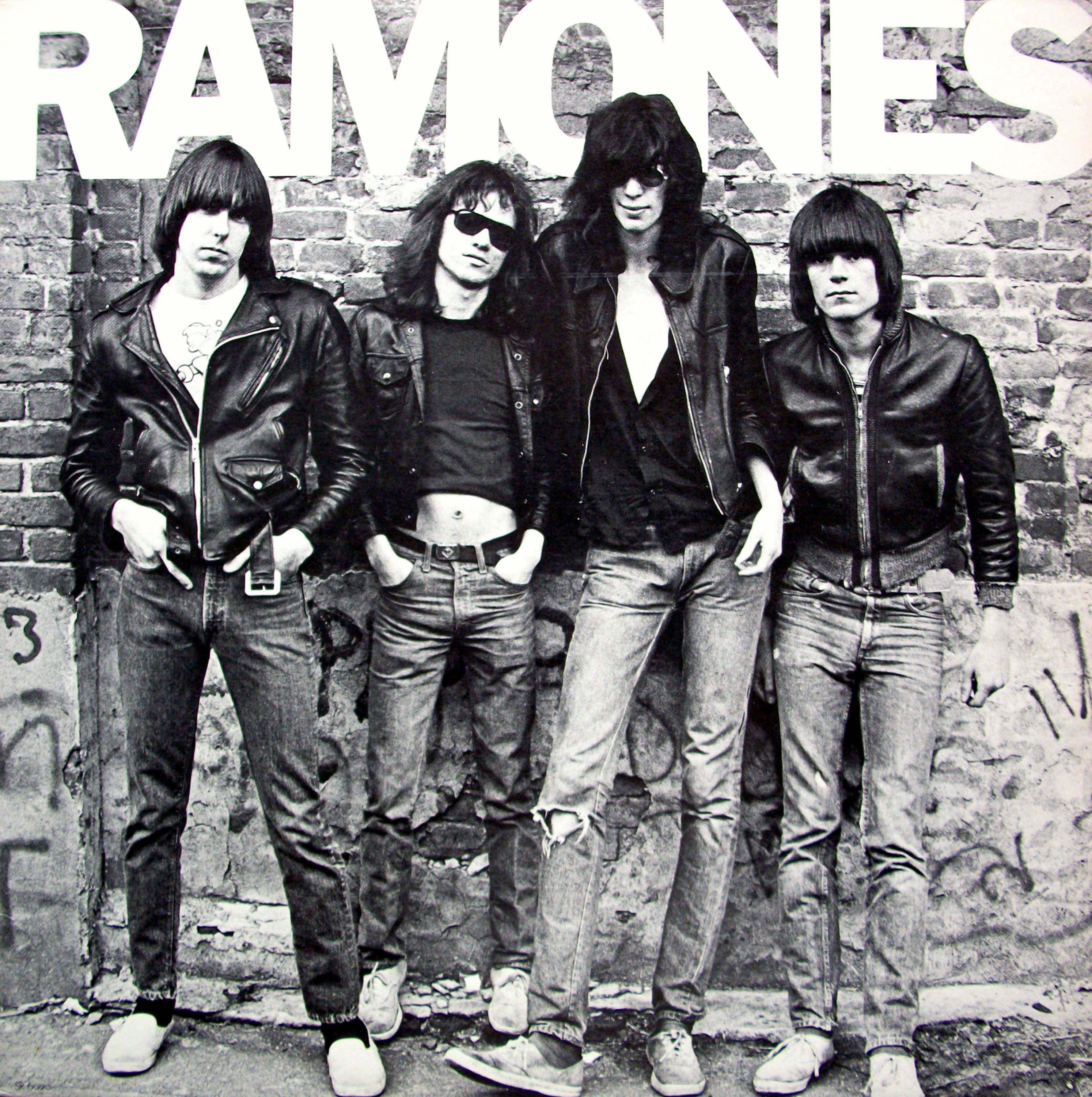
Album Cover Recreation Project


The Album Cover Recreation Masterpiece Of "Ramones"
Here is our rendition of our Album of 'Ramones" of my group mates.
Here is the link to the album cover photo:
http://markmaynard.com/wp-content/uploads/2014/07/TheRamones.jpg

Monday, January 5, 2015

Masters of Photography Project Reflection

 On my Master of Photography project reflection, I spend the moment to review the other groups' masters project. Here are the answers to the following project reflection questions.

1. How do you think your project represents your work as a student?
   I think my project represents my work as a student by being productive and being creativity into this masterpiece which I always consider. It is mainly represents that I'm learning new things and receive more understanding at the same time and between the connection to the Master of photography and  Hall of Fame famous photographers concept to this project.

2. How has your understanding of photography changed during this school year?
My understanding of photography changed during the school year by learning to see things differently when it comes to taking photos and how to observe the new composition the following photographers had done to combine into one single masterpiece.

3. What are some of the benefits of working in a group?
Some of the benefits of working in a group that I learned the new tips and methods from them. Also, besides getting the new information, I got the chance to learn about their ideas are different based on how they edit and how they observed in their own eyes with their creativity than others.

4. What are some of the disadvantages of working in a group?
Some of disadvantages of working in a group is to look out for one another as a team as checking on each others' blogs, be reliable, and always there to help when our mate(s) needs it.
5. Now that you have had more time to reflect, is there anything that you would have done differently with your recent project?
 I could have done well on more observation of the subjects because there are so many amazing things that reflect and it helps to make the photos more dramatic  and to go take a variety of pictures of some interesting objects that's stand out. 
  
6. Is there anything else that you want to include?
     No, there are no anything else to add.

Wednesday, December 3, 2014

Masters of Photography - Paul Strand

There are 5 photos that I have in here are:

Before:                                                                         After:


Before:                                                                       After:


Before:                                                                           After: 
                             

Before:                                                                          After: 

Before:                                                                                          After:


  About the Photographer

Time Period: 19th Century (1890-1976)
Location: United States
Object/Subject: Landscapes,Portraits,Abstraction,and Architecture
It makes him unique by how he takes the photos that combine with the art concepts such as abstractions, patterns, and still life objects that pave the way to the modern photography in his era.

My View:
I chose the photographer because Paul shows us a lot of geometric shapes such as in the modern way an art form into his masterpiece.
Paul inspired me by showing a lot of still life that is along with the abstractions and lot of clarity to help me see a lot of structure and things in a different way.
It change me while I work on the the project the way I take the pictures that shows a lot composition that can combine the art concepts along with the photography in the modern way and as I take some photos that is similar to Paul, it is very fascinating to observe on how he combine his familiar patterns and shadows in one masterpiece.

The Background On the Photo Editing:
There are the 5 photos in this post that familiar to my master photographer. I edited them in the black and White film in the Camera Raw. As I edit these, in the 2nd post and the final post, I cropped the unwanted stuff on the background, but give it more clarity so you can see the lines and shape. Mainly give more exposure and clarity between the shadows and white so you can see a lot of lines and shape that is in the the main objects in all of the photos.